
Interview · Emerging Risks 2027
“You can effectively price yourself out of the game before you've even started.”
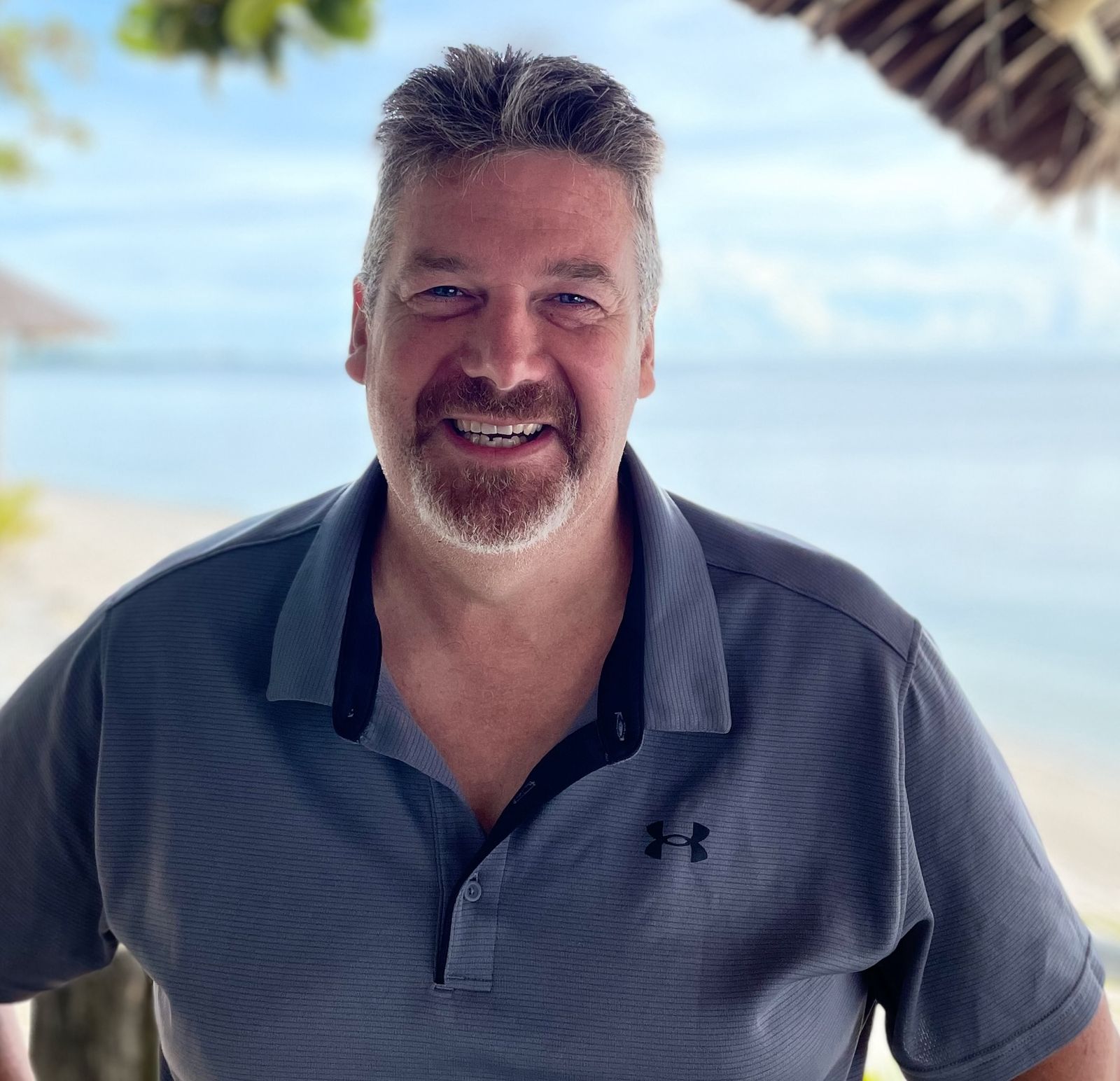
Dave Acton has spent most of his career in F&B, from marketing and operations to owning restaurants, working with brands such as Pizza Hut and Dairy Queen. Originally from Canada, he has lived in Singapore for about 15 years. His firm, CANnect Asia, helps F&B brands scale from one market into the next. Interviewed by Kong Aik Lee on 28 September 2026.
Kong Aik Lee, Covarage
Let's start with an introduction. Tell us a little about yourself and what you do.
Dave Acton
I'm Dave Acton. I'm originally from Canada and I've been in Singapore for about 15 years.
I've spent most of my career in F&B.
I started in marketing before moving into operations, owning restaurants and eventually working across almost every part of the business.
I've worked with large brands such as Pizza Hut and Dairy Queen, as well as brands here in Singapore.
I've also been consulting for about nine years.
Initially, I was a general F&B consultant. Restaurants would call and say, "Here's our problem. Can you help?"
The difficulty was that I was often getting calls from businesses that were already in serious trouble.
I sometimes describe it as calling the doctor when what you really need is the coroner.
About two years ago, we changed our focus toward helping brands scale.
We like to describe it as going from strategy to scale.
You might have one, three, five or multiple restaurants in one market and decide that it's time to enter the next market.
A large part of what we do is helping businesses understand the pitfalls and challenges they're likely to encounter as they grow, so we can address those problems before they become expensive.
Kong
That's exactly what we're trying to explore with Emerging Risks 2027.
For someone opening their first restaurant or F&B business, what are the most common pitfalls you see?
And looking across your experience, what's a mistake you've seen become particularly expensive?
Dave
One of the biggest mistakes is not understanding F&B math.
Two plus two is still four.
But every industry has its own economics.
Someone might come from manufacturing, automotive or another industry where they're accustomed to a particular margin structure. They enter F&B assuming the economics will work similarly.
They don't.
Someone decides they're going to sell cupcakes. They can calculate the cost of the ingredients that go into each cupcake.
But they may not properly understand the overhead, the margins they need, the labour requirements and all the other incremental costs involved in running the business.
Then they underprice the product.
Or they take too much money out of the business because they think the cash that's sitting there is available to them.
I've seen similar problems when investors without deep F&B experience acquire restaurant businesses.
They look at the business and see excess cash that they believe can be extracted.
But if you take too much out of the company, change the underlying economics or create additional fixed costs, you can put enormous pressure on the business.
And you can't necessarily solve that simply by increasing prices.
So one of the biggest mistakes happens before the restaurant even opens.
The business plan doesn't properly reflect the margins, costs and economics required to make the restaurant sustainable.
You can effectively price yourself out of the game before you've even started.
Kong
If you had to identify one cost that first-time F&B owners consistently underestimate, what would it be?
Dave
Labour.
Imagine your restaurant is open for 12 hours a day.
Maybe that's 9am to 9pm or 10am to 10pm.
But you also need time before opening to set up and time after closing to clean.
Suddenly, that 12-hour operating day becomes 14 hours.
A first-time owner might think, "I'll do it myself."
That's fine.
But who's doing the accounting?
Who's managing the supply chain?
Who's doing the marketing?
Who's managing HR?
Who's creating the schedules?
Who's dealing with insurance and administration?
Those things still have to happen, and you can't necessarily do all of them while you're standing inside an operating restaurant serving customers.
Internally, we distinguish between direct and indirect labour.
If your restaurant is open 12 hours and you need one person working throughout that period, you have 12 direct labour hours.
But you also need indirect labour.
As a rough budgeting principle, we might allocate another third of those hours toward things such as bookkeeping, sourcing, scheduling, HR and administration.
Then perhaps the owner realizes they need to hire somebody for another four or five hours.
But they may still underestimate the cost of recruiting that person, training them and paying the additional employment costs that come with them.
Recruiting, hiring, training and retaining staff is much harder than many first-time business owners expect, particularly in a market such as Singapore where unemployment is low.
Kong
We've talked about what goes wrong.
You've also worked with successful organizations and helped F&B businesses expand.
What do the really well-run operators do differently?
Dave
Discipline.
One hundred percent.
The discipline of running the restaurant needs to exist throughout the organization.
You do things the same way every time, whether you're busy or quiet.
One mistake I see with smaller brands is having one process when they're quiet and another process when they're busy.
They'll say, "When we get busy, we'll add somebody here," or, "For now, it's okay if we do it this way."
The problem is that your processes become muscle memory.
When the restaurant suddenly becomes busy, you don't have time to stop and think about how you're supposed to operate.
If you haven't built those behaviours into the organization already, they don't suddenly appear when you need them.
The discipline needs to run through everything.
You conduct inventory every week.
You calculate the value of that inventory every week.
You complete your month-end close every month.
You don't say, "Don't worry about it. We'll let it slide this month."
You cross-reference your orders against your deliveries.
Mistakes happen.
Maybe a case of Coke gets left on a delivery truck.
It doesn't necessarily mean somebody is trying to steal from you. But if you don't notice it, that's your inventory and your profit disappearing.
The same applies to higher-value inventory such as alcohol and meat.
If you're not disciplined about tracking every step, every time, gaps appear.
And things fall through those gaps.
The number one thing I tell operators is that the discipline of running the business needs to be established from the beginning and executed consistently.
When you look at F&B brands that have successfully scaled, that discipline is everywhere.
It's in how they onboard employees, how they train people, how they manage inventory and how they operate their stores.
Consistency is what allows them to scale.
Kong
Let's say I'm a Singapore restaurant owner.
I've successfully opened two outlets, they're profitable, and now I'm thinking, "Malaysia is cheaper than Singapore. I've already proven I can do this here. Why can't I just take the same concept into Malaysia?"
What's the risk?
Dave
The obvious consideration in Malaysia is halal certification and how that affects the market you're able to serve.
If you're operating a bar and restaurant, that's obviously a different proposition.
But even if we put halal aside, the supply chain alone is different between Singapore and Malaysia.
Having somebody who understands that market can potentially make you significantly more effective and get you to market faster.
The rental model is different.
The percentage of revenue that a restaurant typically pays toward rent in Singapore can be very different from Malaysia.
That means your margins change.
Your P&L changes.
Labour is different.
Customer tastes and profiles are different.
Even Johor Bahru and Kuala Lumpur can have very different customer profiles.
You absolutely can figure all of this out yourself.
But you'll stumble.
You'll make mistakes.
And mistakes cost both money and time.
The advantage of working with people who already have experience in those markets is that you can learn from the mistakes that other brands have already made instead of paying to learn every lesson yourself.
“If you haven't built those behaviours into the organization already, they don't suddenly appear when you need them.”
Kong
There's been a lot of discussion about F&B closures in Singapore.
At the same time, new restaurants continue to open.
How should a first-time owner interpret that?
Dave
There's still opportunity.
The opportunity is to open well.
You need to open with the right proposition and with the important considerations addressed instead of trying to make everything up as you go.
If you have good service, good food, the right location, appropriate staffing, the economics work and you're priced correctly, Singapore can still be an attractive market for F&B brands.
But the details matter enormously.
Even something as simple as menu design can affect the economics of the business.
I recently looked at a pasta restaurant with my wife.
The menu was essentially just pasta. No desserts, no drinks and no appetizers.
That's operationally very efficient.
But we chose to eat somewhere else because we wanted a salad and something else alongside the meal.
There will absolutely be customers who love that restaurant's pasta and go there specifically for it.
But every day, there may also be customers like us who choose somewhere else.
The lesson is that you have to think about the entire customer proposition and how you're maximizing the opportunity from every transaction.
Kong
F&B is interesting because it feels very accessible.
Someone cooks well. Their friends and family love their food. Maybe they've successfully run a home-based business.
Then they start thinking about opening a hawker stall, café or restaurant.
What would you tell someone who's about to make that jump?
Dave
Being an excellent chef and running an excellent restaurant are two different skill sets.
A great chef may be incredibly creative and passionate about the food.
But running a restaurant also requires discipline around operations, accounting, labour, inventory, pricing and the P&L.
My advice would be to have someone experienced review your business plan before you commit significant capital.
Validate your assumptions against industry standards and best practices.
Another option is to learn through an established franchise.
A franchise has already developed many of the processes, systems, worksheets, routines and operating standards that a first-time owner would otherwise have to learn themselves.
Yes, you're going to pay a franchise fee and royalties.
But compare that cost against the cost of making avoidable mistakes yourself.
Even if your ultimate dream is to create your own brand, there's value in first learning how a well-run system operates.
Learn the discipline.
Learn the routines.
Learn the systems.
Then when you eventually build your own concept, you're starting with operating experience rather than starting from zero.
Key lessons
Covarage's summary of the conversation, not Dave Acton's words.
Knowing your ingredient cost isn't the same as understanding the economics of an F&B business. Rent, labour, overhead, indirect work, inventory and required margins all need to be reflected in the business model before significant capital is committed.
A restaurant requires substantial work outside operating hours. Bookkeeping, scheduling, sourcing, HR, marketing, administration and training all consume time and money.
Removing too much capital from an operating business can leave it unable to support its underlying cost structure or absorb unexpected problems.
Successful operators don't suddenly become disciplined when they grow. Inventory controls, financial closes, training, ordering and operating procedures become routine before the business reaches scale.
Crossing a border changes supply chains, labour, rent, regulation, customer behaviour and unit economics. Success in Singapore doesn't automatically prove the same model will succeed in Malaysia.
Business owners can learn unfamiliar markets themselves, but experience can shorten the learning curve and reduce the number of expensive mistakes required to understand a new market.
A talented chef can still struggle to operate a profitable restaurant. First-time founders need to recognize the difference between domain expertise and the skills required to run the company around it.
About CANnect Asia
Supplied by Dave Acton.
CANnect Asia is a full-service F&B consulting firm that helps brands expand across SEA+ markets. Its team brings decades of F&B strategy, operations and international franchise experience, including senior leadership roles with brands such as Dairy Queen, Subway and 4Fingers. Learn more at cannect.asia.
Interviews are published with the interviewee's written permission, after they have seen the wording, and are lightly edited for length and clarity. The views are the interviewee's own, including anything said about their own products or services, which Covarage has not verified and does not endorse. Nobody is paid to take part, and no business is named without its permission. Nothing here is legal or insurance advice.
Get Emerging Risks 2027 when it publishes.
One report in January, built from conversations like this one. You can also ask to take part.